
Bloga
Industrial facilities increasingly need backup power systems that can respond to changing electricity demand, reduce fuel consumption, and maintain reliable operation during grid interruptions. Traditional diesel generators remain an important source of standby power, but combining them with battery energy storage can provide a more flexible approach to power management.
An industrial battery energy storage system (BESS) stores electrical energy and releases it when demand increases or the main power supply becomes unavailable. When integrated with a diesel generator, the battery system can support peak loads, manage short-term power fluctuations, and reduce unnecessary generator operation.
However, selecting the right system involves more than comparing battery capacity. Power output, usable energy, discharge duration, generator compatibility, control strategy, safety, and operating conditions all influence system performance. This guide explains how to evaluate an industrial battery energy storage system for hybrid backup power applications.
An industrial battery energy storage system is designed to store electricity and supply power according to the requirements of an industrial facility or commercial installation. A typical BESS includes battery modules, a battery management system (BMS), a power conversion system (PCS), thermal management, fire protection, and an energy management system (EMS).
In a hybrid backup power configuration, the battery storage system works alongside other power sources, such as diesel generators and the utility grid. Depending on the system design, it can provide several functions:
The actual operating functions depend on battery capacity, inverter configuration, control systems, and site power architecture. A battery storage system should therefore be evaluated as part of the complete backup power solution rather than as an independent battery cabinet.
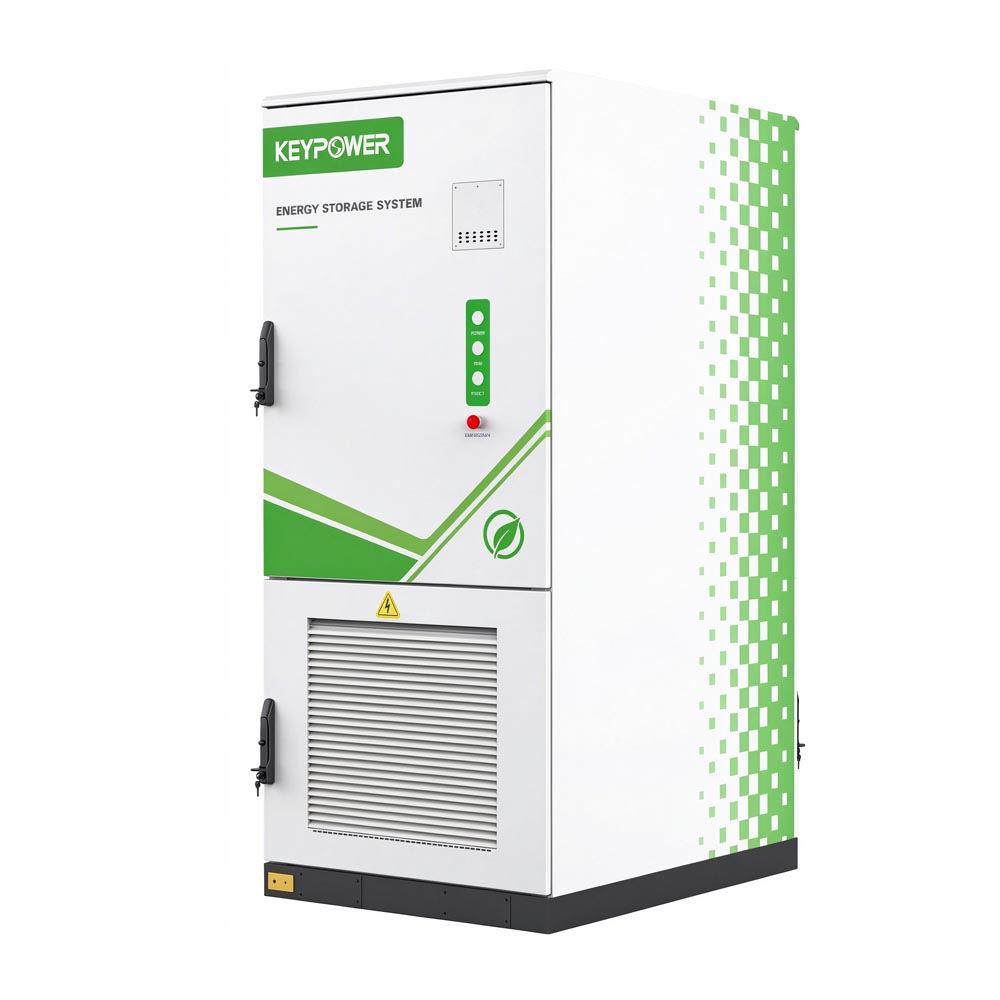
A hybrid battery and diesel generator system combines the fast response of battery storage with the longer-duration power supply capability of a generator. Each component performs a different role depending on the facility's electrical demand.
The battery system can respond quickly to changes in electrical demand. It may supply short-term power during sudden load increases, support critical equipment, and help reduce the need for a generator to respond to every minor load fluctuation.
Diesel generators provide a dependable source of electricity when grid power is unavailable or when the required load exceeds the battery system's available output or stored energy. They are particularly important for facilities that require extended backup operation.
Facilities evaluating this configuration should consider available industrial diesel generator solutions alongside the required battery storage capacity. Generator selection should account for continuous load, starting current, transient demand, operating frequency, and the intended backup duration.
The energy management system coordinates the battery, generator, and grid connection. It determines when the battery should charge or discharge, when the generator should start, and how the available power should be distributed.
For reliable operation, the control strategy should define grid-loss response, generator start and stop conditions, battery state-of-charge limits, load priorities, and recovery procedures. Automatic transfer, synchronization, and protection functions must also be properly configured and tested.
Before choosing an industrial battery energy storage system, buyers should evaluate its technical specifications against the actual electrical requirements of the installation. The following factors are particularly important for hybrid backup power applications.
Power output and energy capacity describe two different aspects of battery performance.
For example, a system rated at 125 kW with 261 kWh of nominal energy capacity has a theoretical full-power discharge duration of approximately 2.09 hours. Actual operating duration depends on usable capacity, conversion losses, operating limits, and the connected load.
Buyers should check both continuous output and short-term overload capability. A system with sufficient kWh capacity may still be unsuitable if its inverter cannot handle the facility's peak power demand.
Battery chemistry affects system safety, energy density, thermal stability, and service life. Lithium iron phosphate (LFP) batteries are widely used in stationary energy storage applications because of their thermal stability and cycle-life characteristics.
Cycle life should be evaluated together with the specified depth of discharge (DoD), operating temperature, charging conditions, and warranty terms. A cycle-life figure alone does not fully describe the expected service life of a battery system.
For example, KEYPOWER's KPES-125/261L All-in-one ESS Cabinet specifies an LFP battery configuration and a cycle life of at least 8,000 cycles. Buyers can use these published specifications as a starting point when comparing industrial energy storage solutions.
Round-trip efficiency measures how much energy can be recovered after charging and discharging the battery. It is important when estimating operating costs and evaluating the energy available for backup applications.
For example, a system with 89% round-trip efficiency returns approximately 89 kWh of energy for every 100 kWh used for charging under the specified test conditions. Actual results may vary depending on operating temperature, power level, auxiliary consumption, and system configuration.
Buyers should also distinguish between nominal battery capacity and usable energy. The maximum depth of discharge, reserve state of charge, and conversion losses all affect the energy available to connected equipment.
The power conversion system connects the battery's DC output to the facility's AC electrical system. Its rated power, voltage range, frequency, power factor, and response characteristics must match the installation requirements.
Important technical points to verify include:
Compatibility should be confirmed at the system level. In particular, buyers should verify that the battery inverter, generator controller, protection devices, and energy management system can operate together under both normal and abnormal conditions.
Industrial energy storage systems may operate in outdoor installations, containerized environments, and locations with high ambient temperatures or changing weather conditions. Thermal management is therefore an important part of long-term system reliability.
Check whether the system uses air cooling or liquid cooling, its specified operating temperature range, ingress protection rating, humidity tolerance, and altitude limitations.
For larger installations, liquid cooling combined with forced-air cooling can help manage heat generated by battery operation and power conversion equipment. The appropriate cooling configuration depends on system capacity and site conditions.
Battery safety should be assessed before installation, not treated as an optional feature. Buyers should review battery-level protection, system monitoring, fire detection and suppression arrangements, electrical isolation, and emergency shutdown procedures.
Relevant standards and documentation may include IEC 62619, IEC 63056, UL 9540A, and UN 38.3, depending on the product, destination market, and project requirements. These standards address different aspects of battery safety, testing, and transportation, so buyers should verify the exact scope of each document.
It is also important to evaluate the manufacturer's installation instructions, maintenance requirements, emergency response procedures, and available technical support.
Correct system sizing starts with the facility's actual load profile rather than selecting a battery based only on its advertised capacity.
First, identify which equipment must remain operational during a power interruption. Critical loads may include control systems, communication equipment, production machinery, pumps, refrigeration, and data processing equipment.
Record the total running load, peak demand, motor starting requirements, and expected backup duration. Separating critical loads from non-essential loads can help avoid unnecessary battery capacity and improve system economics.
A preliminary estimate can be made using the following formula:
Required Battery Energy (kWh) = Critical Load (kW) × Backup Duration (h) ÷ Usable DoD ÷ System Efficiency
For example, assume a facility has a critical load of 80 kW and requires 2 hours of battery support. If the design uses a usable DoD of 90% and an assumed discharge-path efficiency of 95%, the estimated nominal battery energy requirement is:
80 × 2 ÷ 0.90 ÷ 0.95 ≈ 187 kWh
This is a preliminary sizing estimate, not a final equipment selection. Additional capacity may be required for reserve energy, battery aging, temperature effects, load growth, and project-specific operating requirements.
After estimating energy capacity, verify that the battery inverter can deliver the required power. If critical loads total 80 kW, the selected system must support at least that output under the intended operating conditions, with additional allowance where required for transient loads and future expansion.
Motor starting currents, transformer energization, and other short-duration demand peaks should be included in the electrical design. Battery energy capacity cannot compensate for an inverter with insufficient power output.
KEYPOWER offers several energy storage configurations for different power and installation requirements. Reviewing available product specifications can help buyers identify an appropriate starting point for project evaluation.
The following examples illustrate the differences between cabinet-based and containerized energy storage solutions.
The KPES-125/261L is an all-in-one energy storage cabinet with a rated AC output power of 125 kW and a system energy configuration of 261 kWh. Its published specifications include LFP battery cells, liquid cooling combined with forced-air cooling, and a cycle life of at least 8,000 cycles.
Other listed specifications include 89% maximum round-trip efficiency, IP55 ingress protection, and Modbus TCP/IP communication. This configuration provides a useful reference for projects evaluating cabinet-based industrial energy storage.
For projects requiring a larger energy storage configuration, the KPES-1000/2170L provides a rated AC output power of 1,000 kW and a system energy capacity of 2,170 kWh.
Its published specifications include LFP battery cells, liquid cooling combined with forced-air cooling, a cycle life of at least 8,000 cycles, and IP55 protection. The containerized design is intended for larger-scale energy storage installations.
The KPES-50/120A is an air-cooled hybrid energy storage cabinet. Its published specifications include an LFP battery system with 120.58 kWh rated energy, a maximum DoD of 95% under specified conditions, and a cycle life of at least 8,000 cycles.
It also supports photovoltaic input and provides multiple rated AC output configurations. This makes it relevant for projects evaluating integrated solar and battery energy storage arrangements. The actual operating configuration should be confirmed against the project's electrical design.
For utility-scale and large industrial energy storage requirements, the KPBS-5015L provides a containerized battery configuration with 5.015 MWh of rated system energy. Its published specifications include LFP battery cells, liquid cooling combined with forced-air cooling, and a cycle life of at least 8,000 cycles.
The system also specifies IP55 protection and a maximum charge/discharge rate of 0.5P. Buyers evaluating large storage projects can review the KPBS-5015L Liquid-cooled Battery Storage Container for further technical details.
Even when the battery and generator have suitable rated capacities, the complete backup power system must be tested under realistic operating conditions.
Load testing helps verify whether power generation equipment can maintain stable output under the expected electrical demand. For hybrid installations, commissioning should also verify the interaction between the generator, battery inverter, transfer equipment, and control system.
Testing may include:
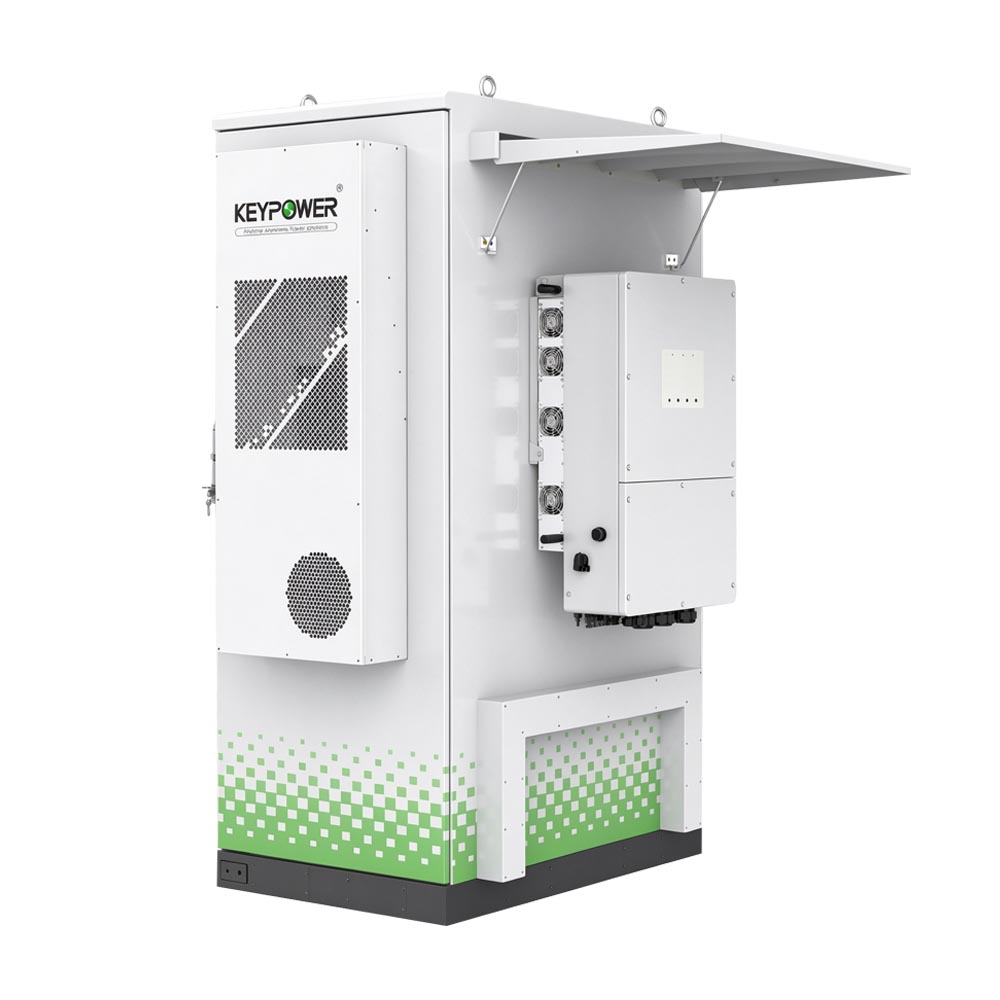
For generator commissioning and performance verification, buyers can also explore KEYPOWER's industrial load bank solutions. Load banks are used to apply controlled electrical loads during generator testing and help verify performance before equipment is put into service.
Testing procedures for the complete hybrid system should be agreed upon by the project engineer, equipment suppliers, and commissioning team. Generator load bank testing alone does not replace integrated battery and control-system commissioning.
Industrial battery energy storage systems can support different backup and energy management requirements depending on the facility's power demand and operating environment.
Manufacturing plants often operate equipment with varying power demand. Battery storage can help manage short-term load fluctuations, support critical production equipment, and reduce peak electricity demand when integrated with an appropriate control strategy.
Data centers and communication facilities require reliable electricity to maintain servers, networking equipment, cooling systems, and essential infrastructure. Battery energy storage can provide backup support and help manage power transitions, while diesel generators can supply longer-duration standby power.
For these applications, response time, redundancy, power quality, and coordination with existing UPS systems must be carefully evaluated.
Construction projects and remote industrial sites may have limited grid access or changing electrical demand. A hybrid battery and generator configuration can provide flexible power supply while helping reduce unnecessary generator operation during periods of lower demand.
Battery storage can also work with solar photovoltaic systems and diesel generators in microgrid applications. The battery stores available renewable energy, while the generator provides additional power when renewable generation is insufficient or stored energy reaches its operating limit.
For these projects, energy management and generation forecasting are important for maintaining a stable and efficient power supply.
Technical specifications are important, but supplier evaluation should also cover engineering support, documentation, commissioning, and long-term maintenance.
Before placing an order, industrial buyers should clarify the following questions:
Buyers should also request a complete technical datasheet, electrical single-line diagram, system layout, protection scheme, and operating strategy. These documents make it easier to compare suppliers and identify potential integration issues before installation.
Evaluating an industrial battery energy storage system requires a clear understanding of the facility's load profile, backup duration, electrical infrastructure, and operating objectives. Battery capacity, inverter power, efficiency, cycle life, cooling, safety, and generator compatibility should all be considered together.
A well-designed hybrid backup power system does not simply combine a battery with a diesel generator. It coordinates multiple power sources to meet changing electrical demand while maintaining the required level of reliability.
KEYPOWER provides industrial energy storage solutions, including all-in-one ESS cabinets and containerized battery storage systems, alongside diesel generators and load banks. For project-specific requirements, buyers can review the KEYPOWER product range and discuss the required power capacity, storage duration, and integration conditions with the technical team.
An industrial battery energy storage system (BESS) stores electrical energy and supplies it when needed. It typically includes battery modules, a battery management system, a power conversion system, thermal management, and control equipment. It can support backup power, peak shaving, and energy management in industrial facilities.
Yes. A battery energy storage system can operate alongside a diesel generator in a hybrid power configuration. The battery can respond to short-term demand changes and supply stored energy, while the generator provides sustained power when required. Proper synchronization, control logic, and electrical protection are essential.
A preliminary estimate is calculated by multiplying the critical electrical load in kW by the required backup duration in hours, then dividing by usable depth of discharge and system efficiency. Additional allowances may be needed for battery aging, reserve capacity, temperature, and load variations.
kW measures the instantaneous power output of a battery system, while kWh measures its stored energy capacity. Both values are important when selecting a system because the battery must provide sufficient power and enough energy to support the required backup duration.
Backup duration depends on usable battery energy and the connected electrical load. For example, a system with 261 kWh of nominal energy capacity has a theoretical discharge duration of approximately 2.09 hours at 125 kW before accounting for usable capacity and conversion losses. Actual backup time depends on the system configuration and operating conditions.
Lithium iron phosphate (LFP) is commonly used in stationary battery energy storage systems. It offers favorable thermal stability and cycle-life characteristics. Buyers should also evaluate the battery management system, safety protection, operating temperature, and warranty conditions.
Buyers should evaluate rated power, usable energy capacity, backup duration, battery chemistry, cycle life, round-trip efficiency, inverter compatibility, generator integration, cooling, fire protection, certifications, and after-sales support. Site-specific electrical requirements should be confirmed before final system selection.


 IPv6 obsługiwana sieć
 Polski
 Polski
 English
 français
 Deutsch
 русский
 español
 português
 Nederlands
 العربية
 中文
